Varies
.avif)
92%
of patients in our in-house study experienced near-complete pain resolution. Most start feeling it within days.

4.7 Stars · 200 Reviews.
2x Board Certified Physician
6x Best of Denton
You shouldn’t have to plan life around back pain.
A 30-minute office procedure is giving people with chronic lower back pain something they thought was gone for good: real, lasting relief.

Take the 60-second quiz
The frustration isn’t just about the pain anymore…
it's what it takes from you.
30-minute Office Procedure • Lifetime Relief
Maybe you’ve been told your MRI looks normal. Maybe you’ve even had back surgery that didn’t fix it. You're second-guessing whether you can pick up your grandchild. Skipping the trip because you're not sure your back can handle it.
How SI joint stabilization at API Texas compares

API Texas
SI Stabilization
Hospital-Based
SI Fusion
Injections
Only
Chiropractic
/ PT
Confirms pain source first

Dual diagnostic injections
❌
Treats symptoms
❌
Treats symptoms
Procedure time
~30 minutes
1–2 hours
15–30 min (repeating)
Ongoing sessions
Setting
Office-based
Hospital / OR
Office-based
Office-based
Anesthesia
Conscious sedation
General anesthesia
Local
None
Walking same day
Yes
Often next day
Yes
Yes
Relief timeline
Most within days
Weeks to months
Weeks (temporary)
Varies (temporary)
Long-term fix
Permanent
Longer recovery
❌
Repeat visits
❌
Repeat visits
Success rate
92% near-complete relief*
60–70% improvement
Temporary by design
Varies widely
*Based on Advanced Pain Institute of Texas internal study data

Take the 60-second quiz

“We see patients every week who’ve been told there’s nothing left to try. That’s usually where we start.”

Dr. Eric Anderson + Dr. John Broadnax
Watch Dr. Anderson's webinar
4.7 Stars · 200 Reviews.
2x Board Certified Physician
6x Best of Denton
Hear it directly from
Dr. Anderson
In this conversation, Dr. Anderson explains how SI joint dysfunction is diagnosed, what the procedure involves, and what patients can expect.
What is
SI joint Dysfunction?
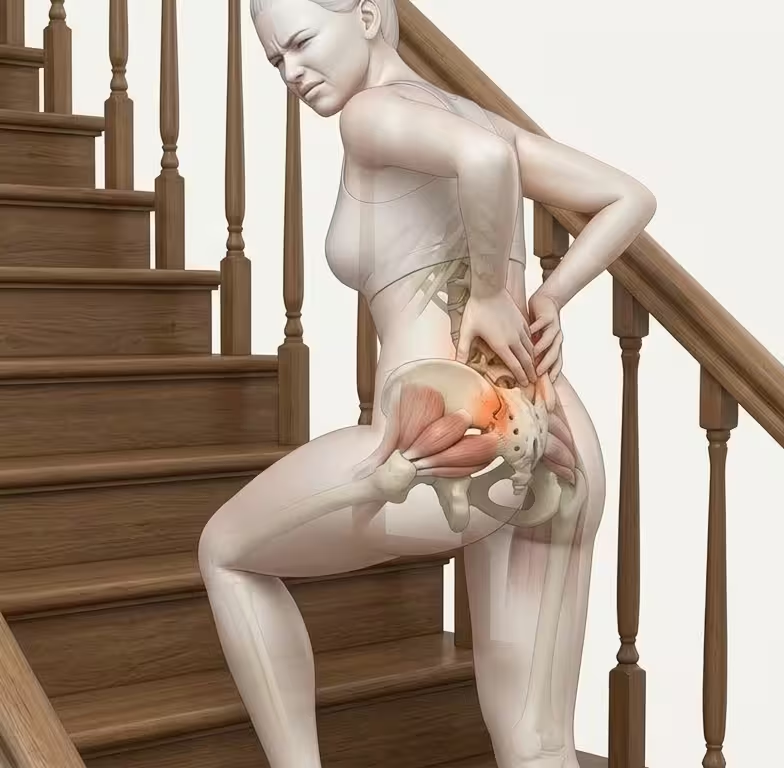
Your sacroiliac (SI) joint sits right at your belt line where your lower spine meets your pelvis.
It's the largest axial joint in your body and acts as a shock-absorber between your upper body and legs. When it becomes unstable or inflamed, it can cause persistent pain that's often mistaken for a hip problem or general back pain.
Up to 30% of chronic lower back pain originates from the SI joint, but it's one of the most commonly overlooked sources.
Common signs your SI joint may be the problem

Pain at or just below your beltline, you can often point to it with one finger
Aching in your lower back that can radiate into the buttock, hips, thighs, or groin
Discomfort climbing stairs or stepping up a curb
Pain getting in and out of a car
Pain that gets worse when sitting for a long time
Pain standing on one leg for more than a few moments
Sound Familiar?
Book my consultationAnd if it’s not your SI joint?
We treat pain from head to toe. We will find the cause.
Take the 60-second quiz
Common signs your SI joint may be the problem

1
Come in and we’ll find it
We evaluate your pain with a physical exam, imaging, and a targeted diagnostic injection. If numbing the SI joint relieves your pain, we've found the source. We do this test twice because we want to be certain before recommending anything.
2
30 minutes. One small incision. Go home the same day.
A thumbnail-sized spacer is placed through a 1.5 cm incision to stop the joint from sliding. You get conscious sedation — not general anesthesia — and you're walking the same day.
3
Get back to your life
Most patients feel relief within days. The spacer fuses naturally over 6–8 weeks, permanently stabilizing the joint. No months of rehab. No ongoing injection cycle. Just the life you've been missing.
Find out if your SI joint is the source
You're not coming in for surgery. You're coming in for answers. If the diagnostic injection relieves your pain — we'll talk about what's possible.
Get back to living
— not just getting by.
— not just getting by.
4.7 Stars · 200 Reviews.
2x Board Certified Physician
6x Best of Denton
And if it’s not your SI joint?
We treat pain from head to toe. We will find the cause.
Take the 60-second quiz

Advanced Pain Institute of Texas
© 2026 | All Rights Reserved